Tuesday, January 24, 2017

Examining the Current Parish Situation


Dear Parishioners,

Every once in a while I think that it is a good idea to stand back and examine how things are going in the parish.  Personally, I am rarely satisfied with the status quo.  I ask myself: How can we better serve the people given the current resources (financial and personnel) that we have?  Are we properly planning for the future?  How do we reach out to the inactive and disengaged Catholics in our area?  What are we missing?

Specifically as your pastor, I ask you, our parishioners: are your sacramental needs being met?  A priest is specifically ordained for certain ministries which only he can perform:  offering the Holy Sacrifice of the Mass, absolving sin in the Sacrament of Penance and Reconciliation and anointing the sick and dying in the Sacrament of the Anointing of the Sick.  This leads me to question:  Is the current Mass schedule satisfactory (times and frequency)?  Are there enough opportunities given for confession?  If people are serious ill, do they understand the need to reach out to the priest before an actual emergency for anointing?

  • The Mass times were established before I arrived as pastor.  Attendance, from week to week, never seems to be quite consistent.  Should the times be adjusted or are they satisfactory?
  • We currently offer the possibility for confession only on Saturdays each week.  The numbers are never too great at that time.  During Advent and Lent an additional opportunity is given after all of the Masses on a chosen weekend.  Should we make other opportunities available?
  • Holy Communion can be brought each week to any homebound parishioner desiring it by an Extraordinary Minister of Holy Communion or a deacon.  A priest should be requested for the specific purpose of sacramental confession and anointing of the sick whether at home or in the hospital.  A Catholic hospital chaplain is assigned to all of our local hospitals by the diocese.  In what ways can we minister to the needs of our sick, homebound or dying better?

Other areas that I think need to be addressed include reaching out to inactive or fallen away Catholics.  Should we engage in some type of parish census or door-to-door evangelization effort?  This would necessarily require the help of many parishioners willing to visit their own or other neighborhoods.

Frequently, our youth participation becomes a topic of concern in the parish.  Do we have more volunteers willing to help with Children’s Liturgy, with our newly-formed youth group, with religious education classes and sacramental preparation?  [Remember that all who regularly work with youth are required by the diocese to submit to a criminal background check and must attend a NJ Child Assault Prevention (C. A. P.) program.]       

Forthcoming will be a survey about these and other topics.  However, I wanted to get people thinking ahead of time about what we can better do as a parish to meet the needs of our parishioners.  The ordained (priests and deacons) cannot be expected to be personally responsible for every aspect of any parish.  The most effective parishes have great parishioner involvement and support, realizing that there are many gifts, talents and abilities coming from the parishioners within any given parish.

If not me, then who will do it?


Fr. Ed Namiotka
Pastor

Tuesday, January 10, 2017

Eavesdropping on a Dinner-time Conversation


Dear Parishioners,

Tired after a rather busy day in the parish, I decided to go out for dinner (by myself) to a nearby oriental restaurant.  I was seated at a table in very close proximity to a youthful couple.  We might as well have been sitting at the same table; we were so close to each other.  They appeared to be much too young to be married.  They had a bit of that twinkle in the eyes that said that they were quite interested in each other romantically.
 
There I was, minding my own business.  I could not but hear their entire conversation as I pretended to look at and play with my Smartphone.  They discussed various matters—most of which seemed to me like just-getting-to-know-you small talk.

Then my interest was piqued.  The young fellow informed his date:  “You know there are no U-Hauls in a funeral procession.”  Hey wait a minute!  That’s a line that I have often used!  Where did he hear this?  (I had “borrowed” the phrase from a talk I heard Fr. Benedict Groeschel, CFR give many years ago.)  Where was this guy going with his conversation?

He continued as I rather nonchalantly listened more intently.  “I guess life means that we try to experience as many good, happy things as we possibly can for as long as we can.  We don’t know when it is all going to end.”  I waited for some additional “wisdom” about an afterlife.  I hoped that there would be some mention of God and of a divine plan for us all.  No such luck.  This was not forthcoming.  I recalled the phrase:  Eat, drink and be merry for tomorrow we die!  Is life solely about trying to experience as many good, happy things as we can before we die?

The couple came to mind later that night as I could not readily fall to sleep.  With continued restlessness and perhaps a bit of insomnia, I turned on the TV for a brief moment.  I stumbled upon a spoof of the 70’s-80’s band Kansas singing their hit song Dust in the Wind on a late-night show.  “All we are is dust in the wind . . . everything is dust in the wind.”

What was I hearing God say to me today through all of this?  Without a sense of purpose and direction given to us by our Christian faith, the meaning of life remains unknown, or becomes lost or distorted.  As Christians, we should realize that we are not merely dust in the wind but rather divinely created beings in God’s image and likeness.  Life’s main purpose is not simply to experience as many good, happy things as possible, but to try to know, love and serve a God who loved us into existence and wants us to be with Him for all eternity.  The message of the Gospel is good news for a reason.  It is meant to give us hope as we realize meaning, purpose and direction in life.  We are given the hope of eternal life through Jesus Christ!

I was tempted to interject my thoughts into the couple’s dinner conversation that evening.  In the end, I resisted.  They didn’t realize that I was listening, that I was a priest and I didn’t want to give them indigestion on their date.

On the other hand, maybe I should have given them some unsolicited food for thought!

Fr. Ed Namiotka

Pastor


Tuesday, November 15, 2016

Giving Thanks Again


(I wrote the core of this a number of years ago.  I thought maybe it was worth repeating.)

Dear Parishioners,

With Thanksgiving approaching, I ask that you take the time to consider and reflect on the things for which you are thankful.  Most of us will find times when we like to moan, groan and complain about many things.  We may tend to see the glass as half-empty rather than half-full.  However, it is a good practice to take an inventory of the things in our lives that we might take for granted or fail to fully appreciate each day.

A statement that I heard quite some time ago seems to put things into proper perspective for me: I used to complain about the shoes that I wore until I met the person with no feet.

Am I thankful for that fact that I am alive?
            Aborted babies never had that opportunity.

Do I thank God every day for my health?
          The hospitalized and homebound might long for days without pain and the ability to get out of bed.

Do I love God with all my heart, soul, mind and strength?  Am I truly grateful that Jesus suffered and died on the cross for me?
            God loved us into existence and then sent His Son to show how much He truly loves us.  Have I thanked God daily and tried as best as I can to love Him in return?

Do I take my Christian faith for granted?
            There are still places in the world where people suffer and die for being a Christian.

Do I go to bed each night with a roof over my head and a full stomach?
            The homeless and those in line at a soup kitchen are probably envious.

Do I have a family with whom I can spend the holidays?
            The orphan, widow or widower, soldier in a foreign country, or person in prison might not have such good fortune.

Have I tried to cultivate a thankful heart?
            Complaining, in and of itself, doesn’t accomplish much.

If I can read and understand what this reflection is all about, am I truly grateful?
         The blind, the mentally ill, a person with Alzheimer’s, or simply an illiterate person might not be able to do what you are doing right now.

Need I say any more?

Please give thanks.  

There’s no better way to do this as a Catholic than by participating in the celebration of Mass on Thanksgiving Day.  

Hope to see you there!

Gobble! Gobble!


Fr. Ed Namiotka
Pastor (AKA, the main turkey)

Thursday, November 3, 2016

Vocation Awareness


Dear Parishioners,

This week we have Logan Nilsen, a seminarian of the Diocese of Camden speaking at all of the Masses to encourage priestly vocations.

To supplement what Logan has to say, I thought that I would share my own vocation story with you.  My vocation to be a priest started in the family, in the home and in the Catholic schools.  My parents were not overly religious.  We attended Mass faithfully each week and my siblings and I were in contact with priests and sisters primarily through the Catholic schools that we attended.  Priests and sisters were regularly invited to our home for dinner.  My parents never pushed the idea of being a priest on me.  However, being an altar server from about third grade on through high school and being in a Catholic elementary school put me into close and regular association with my parish priests.

I really began to think seriously about being a priest in high school.  I could remember standing in my high school cafeteria during a school dance (checking out the girls there) when a priest who taught me religion came up to all the guys.  He was asking if we ever thought about becoming a priest.  When he came up to me, I told him politely that I had thought about it but I don’t think that it was for me.  Sometime later in my senior year, however, I went back to the same priest and admitted to him that I thought that God was indeed calling me to be a priest.  I wanted some information at that point about entering the seminary.

After going through the necessary application procedures, I entered the college division of St. Charles Seminary in Philadelphia at the age of eighteen studying for the Diocese of Camden.  Many people questioned whether I knew what I was doing, some suggested that I experience more of life first, but I knew what I was hearing internally was this mysterious call from God—an invitation from Jesus to be his disciple, his priest.  After four years of college, four years of graduate school theology at Mt. St. Mary’s Seminary (in Emmitsburg, Maryland), and a pastoral year in a parish, I was ordained a priest at the age of twenty-six.

This May I will be thirty years a priest.  I can distinctly remember praying in high school that God would give me a good wife.  In fact, He answered this prayer in a way that was quite remarkable.  Jesus gave me His own bride—the Church.  It was not quite what I expected, but it was what He had planned for me.  And I am truly grateful beyond words.

I know that today there are many more distractions preventing young people from even considering being a priest.  I genuinely do not think that our faithful God ever stops calling.  Rather, I truly think people stop responding to the “call.”   They stop saying “yes.”  God with His invitation never takes away our free choice.  He offers us as priests a unique privilege to act in persona Christi capitis (in the Person of Christ the Head).

A Catholic priest is called to preach and teach, to govern and to sanctify the People of God.  In the sacraments he is necessary for us to have the Holy Eucharist, to forgive sins in confession and to anoint the sick and dying.

Please pray for our seminarians and priests.  Please encourage young men to think and pray about a priestly vocation.  God will continue to do the calling.  We should do our part to support and promote whatever God intends.


Fr. Ed Namiotka
Pastor

Logan Nilsen     
Diocese of Camden Seminarian

Tuesday, October 25, 2016

“Crash-Proof” Retirement


Dear Parishioners,

Maybe you have seen an advertisement on television touting a “crash-proof” retirement plan.  Quite frankly, I do not have enough knowledge in the area of investments and finance to tell anyone whether this is or is not valuable financial advice to help plan for the future.  You would have to check it out for yourselves.  Sorry. 

What I do know, however, is that no matter what we may plan for in the future, unless Jesus is at the center of it, our plans may, in fact, be ill conceived.  Do you remember the parable that Jesus told regarding accumulated wealth?  Listen to the words from St. Luke’s Gospel:

Then [Jesus] told them a parable. “There was a rich man whose land produced a bountiful harvest. He asked himself, ‘What shall I do, for I do not have space to store my harvest?’ And he said, ‘This is what I shall do: I shall tear down my barns and build larger ones. There I shall store all my grain and other goods and I shall say to myself, “Now as for you, you have so many good things stored up for many years, rest, eat, drink, be merry!”’ But God said to him, ‘You fool, this night your life will be demanded of you; and the things you have prepared, to whom will they belong? Thus will it be for the one who stores up treasure for himself but is not rich in what matters to God.” (Lk. 12: 16-21)

The first thing that I noticed here was that the rich man questioned himself for advice.  What shall I do?  From my perspective, it seems it would have been much wiser to ask God first for advice.  What do You, Lord, think I should do?  We need to pray constantly for the wisdom to make good decisions in life. 

Next, Look at God’s response to the rich man’s plan:  You fool.  That often characterizes the result of any situation when we think that we—and not God—are ultimately in charge of everything.  Many people today may not overtly proclaim that they do not believe in God.  However, so many of us live in a manner as if God did not exist.  We foolishly depend more on ourselves—to a greater or lesser degree—rather than seek out God and let God (speaking through the Sacred Scriptures and the Church) influence our thoughts and actions.  Pope Benedict XVI referred to this mode of living as a practical atheism.  The tragic result of it is that Jesus’ teaching frequently goes unheeded and ignored.  Nobody, not even God Himself, is going to tell us what to do.  And we become all too comfortable and complacent with this attitude.

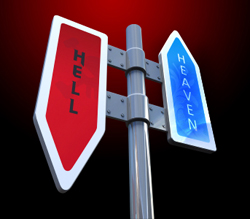
Third, death becomes the great equalizer.  Tempus fugit, momento mori.  Time is fleeting, remember death.   We may not want to face the inevitable reality that we all are going to die, face final judgment before God, and live either with God (heaven) or alienated from God (hell) for all eternity.  The choices we make here do have eternal consequences.  Are we prepared for this?

Finally, what are the spiritual treasures that we are storing up now?  As we near the end of this Jubilee Year of Mercy, I suggest that we refer to the Corporal and Spiritual Works of Mercy for some sound advice.

Don’t be like the foolish rich man in the parable.  Act now to prepare for eternity.  

Forever is a really, really long time.


Fr. Ed Namiotka
Pastor


Tuesday, October 18, 2016

Legislating Morality


Dear Parishioners,

My late father, in his own humorous way, could make a point stick in your mind.  He used to say "The smarter they get, the dumber they get!" with reference to the supposedly educated elite.  My father never had the privilege of going to college--just about making it through high school.  However, he did see to it that his five children received a college education.  In fact, he saw us all attend Catholic colleges, Catholic high school and Catholic elementary school.

Sometimes the rationalization, the doublespeak, and the deception, that is created by an allegedly educated elite baffles the mind.  Take the example of those who say that government should not legislate morality.  Has anyone really stopped to think how truly ridiculous this statement is?  Government legislates (makes laws) all the time.  They tell us that we must not speed when driving nor drink alcohol to excess when operating the vehicle, that we cannot rob a bank or convenience store, that rape and child molestation are illegal, and even, at times, try to tell us how big of a soft drink that we should be allowed to purchase!  Government gives us an age at which we can legally consume alcohol, purchase cigarettes, gamble in a casino, drive a car, own a gun, vote, etc.

Usually the argument about legislating morality gets fuzzy in some people's minds when it comes to topics like abortion, contraception, homosexual acts (e.g., sodomy), same-sex unions, and other various bedroom issues.  It's at this point when people don't want government telling us (legislating) what to do.

The fact is every civilized society determines right and wrong in their culture.  What is permitted or not permitted has to be based on a standard of norms which the society mutually agrees upon.  The basis of these norms has generally been natural lawNatural law can be defined as a body of unchanging moral principles regarded as a basis for all human conduct.  Notice that up to this point there has been no direct mention of God or religion in this process.  (Christians can, however, experience a deeper understanding behind many moral issues through recourse to what is given by Divine revelation--i.e., Sacred Scripture and Tradition).
        
Some words by Trevor Thomas are worth considering at this point:


It is absurd and ignorant to lament conservative Christian efforts when it comes to abortion, marriage, and so on as some attempt to "legislate morality." The other side is attempting the very same thing! In fact, the lamenter (whatever his political persuasion) has also taken a moral stand. Thus, he is like the bank robber who calls the police because his getaway car gets stolen. 


What's more, those who attack Natural Law (because an attack on a position that stems from Natural Law is an attack on Natural Law) do so with arguments derived from Natural Law. It is a self-defeating effort. They are attempting to saw off the limb upon which they sit.

So where am I going with all of this? When people start telling the Catholic Church to stay out of an issue (e.g., keep out of the bedroom), that we as a society cannot legislate morality, or anything similar, please realize a few important observations. First of all, the bedroom issues have regrettably become part of the public forum. I would say in response: keep your bedroom out of our public life! Keep the pornography off TV, out of the cinema, not so readily and easily accessible on the internet, etc.  And don't try to force me or our society to pay for your abortions.  That is what a repeal of the Hyde amendment would do.  Don't legislate same-sex unions.   

Next, please finish your thoughts with regard to the slogan:  the right to choose.  The right to choose whatMurder of innocent children (a.k.a., abortion)?  Yes, we all have free will but we can certainly determine what we can or cannot choose.  Often we put this into law.   We, in fact, do it all the time.  We can choose as a civilized society to protect all human life in the womb.  We can unequivocally state that the choice to kill an innocent baby in the womb (terminate a pregnancy) is wrong.  We can use natural law and the light of reason to help us (perhaps made ever more clear by certain Judeo-Christian principles).  If we can scientifically determine when a new human life begins (at conception), then we as a civilized society can and should choose to protect that new human life.  We have in our history made laws protecting a bald eagle's eggs and our environment, haven't we?  Why did we ever allow the Supreme Court to legislate legalized abortion for us as a society in 1973 by Roe v. Wade?

I  am tired of lies and deception and the confusion that this creates.  We need more clear, critical thinkers and not those who become brainwashed by some educational or political elitists.

Their intelligence is much too dumb for me. 

Fr. Ed Namiotka
Pastor


Monday, September 19, 2016

Progress Update


Dear Parishioners,

As you know, we began our Celebrating 70 Years:  Embracing the Mission, Continuing Our Tradition capital campaign last Lent.  We exceeded our goal of $900,000.00 in pledges and outright gifts and I thank you all for this.  God is so good!

So where do we stand as of today?
 

  •  Next, we began working on all of the required fire code upgrades to ensure maximum safety for our congregation.  A fire sprinkler system was installed in the church basement.  Fire rated doors are ordered and soon will be installed in the basement and stairwells.  Everything mandated by the state fire marshal will soon be completed.

  • A new digital piano was purchased to replace the aging baby grand piano in the church.

  • The deteriorating slate roof on the rectory garage, with its loose shingles, was replaced.

  •  A new sound system for the church is near completion.  This process involved replacing the pre-existing borrowed amplifiers, all new wiring (installed beneath the sanctuary floor), equalizers, control panels, wireless microphones, headset components for the hearing impaired, and speakers for the body of the church.  While everything is not yet finished, we are getting very close!

  • The existing green carpets of the sanctuary had to be cut open to allow for the installation of the wiring channels for the new sound system below the sanctuary floor.  A decision was then made to install a new hardwood floor instead of replacement carpeting.  The hope is the new style floor will be dignified and visually attractive befitting the sanctuary area, be easy to clean and maintain, and should be durable enough to last for many, many years to come.


Thankfully, the redemption of pledges continues on a regular basis.  Very soon we will begin some security enhancements and building renovations to the parish office.  This will include an outside ramp to be more handicapped-accessible.  A future large-scale project will certainly be the church HVAC system (heating, ventilation and air-conditioning) which will be one of the most costly expenses to date.  Please be aware that this will necessitate a very large portion of our raised funds.  Currently, the redemption phase of our capital campaign has not yet accumulated all the necessary funds to accomplish this particular project.

Regularly, I am meeting and working with our parish finance council and our capital campaign chairpersons to assure that we continue to make progress and properly maintain all our parish facilities.

It is only through your continued generosity that we will be able to bring all of our many plans to completion.


Fr. Ed Namiotka
Pastor 

Tuesday, September 6, 2016

"I Thirst"


Dear Parishioners,

This past week the Catholic Church and the entire world witnessed Pope Francis, before a crowd estimated at 120,000, canonize Mother Teresa of Calcutta (Kolkata) a saint.  The actual canonization is the end of a long process of investigation into the life and work of a particular person who was recognized for holiness of life in imitation of Jesus Christ.

Mother Teresa was born Gonxha Agnes Bojaxhiu to Albanian parents on August 26, 1910.  At age 18 she entered the Sisters of Loreto (Institute of the Blessed Virgin Mary) in Ireland.  She was sent by her religious order to India where she became a geography and catechism teacher and eventually headmistress of school.  While recovering from tuberculosis, in 1946 she is said to have received a “call within a call” from God to found what would become the Missionaries of Charity.

This newly formed religious congregation (1950), beginning with just a dozen sisters, established its first home for the dying in 1952.  What followed later included clinics for leprosy (Hansen’s disease), orphanages, AIDS clinics, and various centers of charity (approximately 450 worldwide) caring for refugees, the blind, the elderly, the disabled, alcoholics and drug addicts, prostitutes, battered women, the homeless, victims of natural disasters and many others including the “poorest of the poor.”

Mother, who spoke 5 languages, was awarded the Nobel Peace Prize in 1979.  Her order currently has over 5000 religious sisters, along with religious brothers and priests, serving in some 139 countries.  Since 1990, over 1 million volunteers have assisted in the work of the Missionaries of Charity worldwide.  Mother died of a heart attack on September 5, 1997.  Affectionately known as the “saint of the gutters” during her lifetime, she was officially declared a saint just 19 years after her death.

More recently it was revealed that Mother had a long period of spiritual dryness—something of a dark night of the soul—where any feelings of consolation from God were noticeably absent from her life.  Despite this struggle, she continued to serve the Lord faithfully even with ongoing physical problems including 2 heart attacks, a pacemaker, pneumonia, malaria, and a broken collar bone.

Pope Francis spoke the following during his homily at the Mass of canonization:
       
Mother Teresa, in all aspects of her life, was a generous dispenser of divine mercy, making herself available for everyone through her welcome and defense of human life, those unborn and those abandoned and discarded. She was committed to defending life, ceaselessly proclaiming that “the unborn are the weakest, the smallest, the most vulnerable.” She bowed down before those who were spent, left to die on the side of the road, seeing in them their God-given dignity; she made her voice heard before the powers of this world, so that they might recognize their guilt for the crime – the crimes! – of poverty they created. For Mother Teresa, mercy was the “salt” which gave flavor to her work, it was the “light” which shone in the darkness of the many who no longer had tears to shed for their poverty and suffering.
In every convent chapel of the Missionaries of Charity next to the crucifix are the words:  I Thirst.  These are Christ’s own words (Jn. 19: 28) from the cross.  Mother commented on the phrase to her religious sisters in a letter:

Why does Jesus say "I thirst"?  What does it mean?  Something so hard to explain in words - if you remember anything from Mother's letter, remember this - "I thirst" is something much deeper than just Jesus saying "I love you."  Until you know deep inside that Jesus thirsts for you - you can't begin to know who He wants to be for you.  Or who He wants you to be for Him .  .  .  .   
How to approach the thirst of Jesus?  Only one secret - the closer you come to Jesus, the better you will know His thirst.  "Repent and believe", Jesus tells us.  What are we to repent?  Our indifference, our hardness of heart.  What are we to believe?  Jesus thirsts even now, in your heart and in the poor - He knows your weakness, He wants only your love, wants only the chance to love you.  He is not bound by time.  Whenever we come close to Him - we become partners of Our Lady, St John, Magdalen.  Hear Him.  Hear your own name.  Make my joy and yours complete.

Fr. Ed Namiotka
Pastor 


Tuesday, July 26, 2016

Let the Games Begin


Dear Parishioners,

Let the games begin.  No, I am not talking about the Olympic Games which will begin on August 3, 2016 in Rio de Janeiro, Brazil.  Rather, I am referring to our two political conventions (RNC and DNC) I was watching during my recent vacation.  If you view each spectacle independent of the other, you would think that the opposing candidate was either preparing for role as the messiah or the devil incarnate.  Take your pick.  Truth be told, both candidates are flawed (and Jesus already came to earth as messiah).  What then should be the basis of my vote for president?

I have a novel idea.  Let's see what the individual party platform actually says and compare it to where our church teaching is on the most vital of Issues.  The Republican Party has a 54 page party platform which you can obtain from: www.gop.com.  The Democratic Party's platform consists of a 51 page document which you can obtain from:  www.demconvention.com.

  • First of all, the Catholic Church teaches that all human life is to be respected from conception until natural death.  Abortion, infanticide and euthanasia are all grave sins against human life.  What do the political parties say on this issue?


Republican Platform:

The Constitution’s guarantee that no one can “be deprived of life, liberty or property” deliberately echoes the Declaration of Independence’s proclamation that “all” are “endowed by their Creator” with the inalienable right to life. Accordingly, we assert the sanctity of human life and affirm that the unborn child has a fundamental right to life which cannot be infringed. We support a human life amendment to the Constitution and legislation to make clear that the Fourteenth Amendment’s protections apply to children before birth.

We oppose the use of public funds to perform or promote abortion or to fund organizations, like Planned Parenthood, so long as they provide or refer for elective abortions or sell fetal body parts rather than provide healthcare. We urge all states and Congress to make it a crime to acquire, transfer, or sell fetal tissues from elective abortions for research, and we call on Congress to enact a ban on any sale of fetal body parts. In the meantime, we call on Congress to ban the practice of misleading women on so-called fetal harvesting consent forms, a fact revealed by a 2015 investigation. We will not fund or subsidize healthcare that includes abortion coverage.

Democratic Platform:

Democrats are committed to protecting and advancing reproductive health, rights, and justice. We believe unequivocally, like the majority of Americans, that every woman should have access to quality reproductive health care services, including safe and legal abortion—regardless of where she lives, how much money she makes, or how she is insured. We believe that reproductive health is core to women’s, men’s, and young people’s health and wellbeing. We will continue to stand up to Republican efforts to defund Planned Parenthood health centers, which provide critical health services to millions of people. We will continue to oppose—and seek to overturn—federal and state laws and policies that impede a woman’s access to abortion, including by repealing the Hyde Amendment. We condemn and will combat any acts of violence, harassment, and intimidation of reproductive health providers, patients, and staff. We will defend the ACA, which extends affordable preventive health care to women, including no-cost contraception, and prohibits discrimination in health care based on gender.

  • Regarding the sanctity of marriage, the Catholic Church teaches that marriage is between one man and one woman as designed by God for the expression of love and the begetting of children.


Republican Platform:

Foremost among those institutions is the American family. It is the foundation of civil society, and the cornerstone of the family is natural marriage, the union of one man and one woman . . . Our laws and our government’s regulations should recognize marriage as the union of one man and one woman and actively promote married family life as the basis of a stable and prosperous society.  For that reason, as explained elsewhere in this platform, we do not accept the Supreme Court’s redefinition of marriage and we urge its reversal, whether through judicial reconsideration or a constitutional amendment returning control over marriage to the states.

Democratic Platform:

Democrats applaud last year’s decision by the Supreme Court that recognized that LGBT people—like other Americans—have the right to marry the person they love . . . Democrats will fight for the continued development of sex discrimination law to cover LGBT people. We will also fight for comprehensive federal nondiscrimination protections for all LGBT Americans, to guarantee equal rights in areas such as housing, employment, public accommodations, credit, jury service, education, and federal funding.

Yes, there are more issues to consider--but these two are vitalRespect for human life from conception and the sanctity of marriage are non-negotiable Church teachings.  

I hope that I have sparked your interest regarding policy and urge you to do some research regarding official church teaching on the various issues.

Fr. Ed Namiotka
Pastor


Tuesday, July 19, 2016

What's the Excuse This Time?


Dear Parishioners,

I am on my annual summer vacation and will be back home next week.  Please show Fr. Markellos a warm St. Joseph welcome while I am away as he gets acclimated to the parish.

Sitting on the beach the other day, in proximity to my lounge chair, were four women vacationing together.  Needless to say, as I was soaking up the sun (sorry skin doctor), I heard just about every word of their entire conversation (not really intending to or really wanting to hear it).  I was minding my own business but they were loud enough for me to hear everything that they were saying. I hope that you don't mind it if I give a friendly caution.  Please realize you don't know who may sitting next to you (it may be a priest in a bathing suit) and that you may be revealing things about yourselves that you may not want everyone around you to hear.  It might eventually wind up in the pastor's column of the church bulletin.

At one point in their conversation (I will spare you the details of their recent dinners, getting intoxicated, where they were from, what their jobs were, how one person did not like to go into the water, etc.  See, you really do find out way too many details!) one of the ladies proudly boasted: "Well, I don't go to church anymore!"  Here we go!  Right up my alley!  I thought to myself "What's the excuse this time?"  Stay tuned.  This might finally get interesting.

I thought about many of the excuses that I have heard about not going to Mass time and time again:
  • Mass is boring.
  • Mass takes too long.
  • All the priest ever talks about is money.
  • The priests/people in church are all hypocrites.
  • The scandals in the Church are appalling.
  • I can pray on my own.
  • I am spiritual but not religious.
  • I am too busy.
  • I have to work.
  • We have sports on Sunday.
  • We are tired on Sundays and like to sleep in.
  • I don't get anything out of Mass.
  • I don't think that we should have to go to Mass every week.
  • The Church doesn't care about me.
  • The Catholic Church first needs to change its view on:  women priests / gay marriage / living together outside of marriage / divorce and re-marriage / birth-control, etc.
  • The priest is too:  conservative / liberal / controversial / political / serious / irreverent / egotistical / long-winded / effeminate / creepy, etc.

I want to add a few excuses of my own:  (See if they make any sense or are irrelevant.)
  • I don't think it was important that Jesus suffered and died on the cross for me.
  • I don't need to receive the Eucharist--the Bread of Life--regularly.
  • Hearing the Sacred Scriptures read and explained (preached) does not help me in life.
  • I can save myself and give myself eternal life without Christ and His Church.
  • I can experience healing and forgiveness of sin without Christ and His Church.
  • I am just too proud to admit that I actually may be wrong.

The lady on the beach never did verbalize the why concerning her not going to church.
 
What other excuses may there be out there?  

Don't speak too loud if you don't want me to hear them.


Fr. Ed Namiotka
Pastor