Monday, December 29, 2025

The "Holy Family" and the "Mother of God"

The Holy Family of Jesus, Mary and Joseph
Dear Parishioners,
On the Sunday after Christmas, the Church celebrates the feast of the Holy Family of Jesus, Mary and Joseph. Family means a great deal to me. I have worked hard over the years to try to keep my family together, wherever and whenever it was possible. Spending time my brothers and sister and their families, especially around the holidays, continues to be a special gift to me. I realize that no family is perfect. We all have to deal with particular family issues and circumstances, varying problems and challenges, diverse personalities, etc. Yet, all of this is accompanied by multiple blessings.
Sometimes I think that certain people tend to idealize the Holy Family and forget the many difficulties and hardships that Jesus, Mary and Joseph had to endure. We read in the Sacred Scriptures that Mary was found with child before living with Joseph. He was initially going to divorce her quietly. (Mt. 1: 18-19) Then, there was no place for Jesus to be born in the lodgings of Bethlehem after Joseph and Mary (now in the final stage of her pregnancy) had travelled considerable distance. (Lk. 2: 4-7) As an infant, Jesus’ life was threatened by King Herod and His parents had to flee with Him to Egypt. (Mt. 2: 13-18) Joseph and Mary seemingly lost—could not immediately find—the boy Jesus during their pilgrimage to Jerusalem. (Lk. 2: 41-51) Mary later witnessed her only Son tortured and killed in front of her eyes. (Jn. 19: 25)
These were not quite the circumstances of a perfect, ideal life, were they? Through it all, Jesus, Mary and Joseph had each other and were bound together by mutual love and respect. They all greatly loved and trusted God, our Heavenly Father, and were obedient to His will as it was revealed and unfolded for them.
Today, problems within the family unit continue to exist—at a somewhat grand scale and pace. Various people question, with some even wanting to redefine, the traditional understanding of “family.” Family life as we once knew it in society seems to be eroding. I contend that we need to look at the Sacred Scriptures to see what they teach us (albeit ever so briefly) about the family life experienced by the Holy Family. Their obvious trust in God in difficult circumstances, their obedience to His will, and their fidelity to God and to one another are great examples for us all to follow.
In addition, on January 1st the Catholic Church celebrates the Solemnity of the Blessed Virgin Mary, the Mother of God. While Catholics may use the term Mother of God regularly when praying the Hail Mary, some people may have questions about the meaning of this particular title. The Council of Ephesus (431) declared that the Blessed Virgin Mary is Theotokos or God-Bearer (in Greek). In the Latin Church, we use the term Mater Dei. Simply stated, our Catholic belief teaches that:
Although Mary is the Mother of God, she is not his mother in the sense that she is older than God or the source of her Son’s divinity, for she is neither. Rather, we say that she is the Mother of God in the sense that she carried in her womb a divine person—Jesus Christ, God "in the flesh" (2 John 7, cf. John 1:14)—and in the sense that she contributed the genetic matter to the human form God took in Jesus Christ. (Catholic Answers)
We should remember that the Blessed Virgin Mary is solely responsible for the genetic material for Jesus’ human body (in cooperation, of course, with the Holy Spirit) as St. Joseph was Jesus’ foster-father.
As we begin the New Year, I customarily entrust and consecrate my parish family (wherever I am pastor) to the care of the Blessed Virgin Mary on New Year’s Day. I give this parish and all of its parishioners over to the loving care of the Mother of God. I invite you to join me. I can think of no better way to begin the New Year.
God’s blessings in the New Year!
Fr. Ed Namiotka
Pastor
Thursday, December 25, 2025
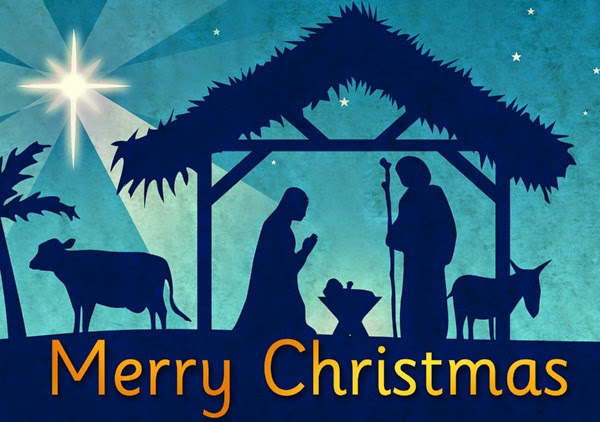
Have a Merry Christmas and a Blessed New Year!
Dear
Parishioners,
Is it my imagination or does every year seems to go by faster and faster? As I get older, I wish that things would slow down a little! In my opinion, there seems to be a constant push to move on to the next thing without necessarily taking the time to appreciate the present. Enjoy the Christmas season!
In
the Church, the celebration of Christmas lasts for eight days. The
joy of this wonderful solemnity is too great to contain within a single
day! We refer to this time as the Octave of Christmas. Most
people not familiar with the liturgical calendar would probably be surprised to
find out that the Christmas season actually extends to January
11, 2026—the Baptism of the Lord.
Sadly, by then many will not be in the Christmas spirit any longer because of
how early the commercial Christmas preparations begin. By the time
Christmas arrives, people are ready to take down their decorations. The Christmas
music will disappear. Many people often seem exhausted from all of
the things that they feel pressured into buying or doing.
With
Christmas upon us, please try to keep Christ at the heart of the
celebration. Society may tell us that we need to shop and exchange gifts,
to cook, to clean the house, to party and to do other things. All of this
seems to add to increased tension and lack of peace in peoples’ lives. Our
faith tells us to pray and to ready our hearts for Christ. This spiritual
preparation can bring us peace, happiness and joy that the world cannot
give. What type of Christmas do we want to have? The choice is always
ours to make.
This
Christmas, I ask that you pray for a stronger faith in Jesus
Christ, the Incarnate Son of God. As we get to know Him and fall
more deeply in love with Him, we can begin to realize how He is truly here for
us when everyone and everything else fails. He
gives meaning and purpose to our lives. He gives
us hope. He embodies love. He is love.
Our Christian faith involves an intimate, personal relationship that
God desires for us to have with Him. The celebration of
Christmas is truly about Jesus and His tremendous,
self-giving love for us. Christmas is all about love—Love that becomes Incarnate!
I
thank all who work so hard in the parish and continue to strengthen our
Christian community. Please be aware of how much we depend on you for your
prayers, your volunteering and service and your financial support. Christianity
is not like a “spectator sport” where we simply watch and cheer from a
distance. Rather, it truly involves active participation and
a life commitment: prayer, attendance at weekly Mass, a sacramental
life, Christian service, love of neighbor, etc. Our parish family will be
only as strong and vibrant as the people who faithfully participate
in it each week.
Be
assured that all members of St. Thomas More parish are remembered in my daily prayers and
Masses. May I ask a small remembrance in your prayers and Masses as
well?
Have a blessed and
peace-filled Christmas!
Fr. Ed Namiotka
Pastor
Monday, December 22, 2025
Monday, December 15, 2025
Tuesday, December 9, 2025
Eucharistic Adoration

Dear Parishioners,
The popular Christmas
Carol O Come All Ye Faithful (Adeste Fidelis) reminds
us to come and adore the Lord Jesus. Commonly, Christians
gather around the Nativity scene, crèche or manger at Christmas
to adore the Christ Child. Saint Francis of Assisi is credited
with creating the first nativity scene in 1223 (a living one) intending to cultivate the worship of Christ. The
scene's popularity eventually inspired communities to create ever more
elaborate static exhibitions with wax and ivory figurines garbed in rich
fabrics set against intricate landscapes.
While we may gather around statues or figures reminding us of the Christ Child and His birth into our world, I think that it is even more essential to recognize His Real Presence found in the Most Blessed Sacrament. It is so important that we come and adore Him who is truly present on our altars and in our tabernacles.
Many years ago, when I was in still in the college seminary, I
came across an article written by Archbishop Fulton Sheen relating
how he used to make a Eucharistic Holy Hour (before the
Blessed Sacrament) every day of his life. He said that while he was
praying before the Blessed Sacrament he felt he was being transformed like
Moses was when he prayed to God on Mt. Sinai:
As Moses came down from Mount Sinai with the two tablets of the
commandments in his hands, he did not know that the skin of his face had become
radiant while he conversed with the LORD. When Aaron, then, and the other
Israelites saw Moses and noticed how radiant the skin of his face had become,
they were afraid to come near him. (Exodus 34:29-30)
When we come into the Lord’s presence, Jesus can do
something to us. We may
think that we go to pray,
to petition and to worship, or even that we are doing God a favor by spending some
of our precious time with
Him. Our Lord Jesus, however, can transform us while we spend time with Him. We do not need to worry
about what prayers we should say, what spiritual readings we should be reading
or what we should be doing in His Presence. Just being with the Lord can be
transforming. He can soften our hearts, heal our wounds, inspire us and
guide us. He can give us an inner peace that nothing in this world can match. Making
the commitment to spend time with Him can truly transform us.
So why not think about spending some time with Him weekly? You
are invited to come and adore the Lord. Each weekday, after
the morning Mass at 9 AM, the Blessed Sacrament is exposed for adoration until
12 noon. Even if there is no formal exposition, the chapel is usually available
for prayer before the Blessed Sacrament whenever the church office is open. Perhaps
you could come a little earlier before Mass and devote some time in the church
or chapel before His Eucharistic presence, even on the weekends. I can
guarantee that if we spend time with Jesus in the Blessed Sacrament, your life
will mysteriously change for the better.
St. Carlo Acutis, the fifteen year old boy who promoted devotion
to the Holy Eucharist through the use of the internet is quoted as saying, “When we face the sun we get a tan… but
when we stand before Jesus in the Eucharist we become saints.”
You are invited to spend time with the
Lord in the Blessed Sacrament. What will your R.S.V.P. be?
Fr. Ed
Namiotka
Pastor
Sunday, December 7, 2025
Tuesday, December 2, 2025
The Call to Repentance

St. John the Baptist
Dear
Parishioners,
During
the second Sunday of Advent each year, St. John the Baptist is featured in the
gospel reading. His call is to repentance
and to be baptized as an outward sign of one’s turning away from sin. He is an
austere figure who lived in the desert and attracted many from the surrounding
region to hear his message of repentance.
The
Church gives us this figure during Advent to encourage all of us to prepare for
the coming of the Messiah, who we proclaim is Jesus of Nazareth, by repenting of our sins and a by conversion of
the way we live our lives—from sin to righteousness.
From
a Catholic perspective, the Sacrament of
Penance and Reconciliation (Confession)
is the best way to accomplish this today. All of the sacraments impart to us Grace, which is the supernatural help
that God gives us by an intimate experience of His Divine Presence. Jesus
interacts with us in every sacrament and raises us beyond the ordinary with His
Divine help.
Fortunately,
since I have been at St. Thomas More Parish over the past five years, I have witnessed more people
availing themselves of this sacrament on a regular basis. I certainly promote
this practice. When I was growing up, the religious sisters who taught me
encouraged monthly confession. We were told to examine our consciences each
night before we went to bed and then say an act of contrition. Moreover, we
were urged to get into the habit of monthly confession and to be sure to go as
soon as possible if there was any serious (mortal) sin in our lives. Confession
is required before receiving Holy Communion, if mortal sin is involved.
Some
day we will come before the judgment seat of Christ (see 2 Cor. 5:10) and will
have to account for all we have done, good and bad. We will then see things as
God sees them and will better comprehend the impact of our actions on others.
Each time we take advantage of the sacrament of confession, we prepare for that
Day of Judgment and are given the opportunity to repent now, to receive God’s forgiveness and to begin anew. It is the
confession of our sins to Christ, through the instrument of the priest, who
then gives us absolution in the name of Jesus Himself. The basis of this belief
is Jesus’ own words to his apostles on Easter Sunday night:
On
the evening of that first day of the week, when the doors were locked, where
the disciples were, for fear of the Jews, Jesus came and stood in their
midst and said to them, “Peace be with you.” When he had
said this, he showed them his hands and his side. The disciples rejoiced when
they saw the Lord. [Jesus] said to them again, “Peace
be with you. As the Father has sent me, so I send you.”
And when he had said this, he breathed on them and said to them, “Receive the
holy Spirit. Whose sins you forgive are forgiven them, and
whose sins you retain are retained.” (Jn. 20: 19-23)
So
when you hear me urge everyone to make a sacramental
confession during Advent, and to get into the habit of monthly confession, just
think of me as continuing the work of St. John the Baptist today.
As
long as there is sin, there will always be a call to repentance and conversion.
Fr.
Ed Namiotka
Pastor
Monday, December 1, 2025
Monday, November 24, 2025
Friday, November 21, 2025
Give Thanks and Prepare!

Dear Parishioners,
As I write this bulletin
column, I anticipate enjoying my annual Thanksgiving dinner
with various family members. I certainly realize how truly blessed I
am. I have three brothers and a sister and their
families, who mostly live in close proximity. I am so fortunate to have a
number of people gathered together to share this family day
and traditional meal. Thanksgiving always fell near my mom’s birthday and she
is certainly missed. I will not be doing the cooking this year, as I have done
many times in the past, since my brother’s family graciously offered to host
the dinner.
As I reflect, I remember
those people who would forgo time spent with family and friends to
begin to camp out or stand in line on Black
Friday in order to be early enough to get some advertised bargain at the retail
stores. Thankfully, online sales have curtailed this practice.
Nevertheless, I worry whenever we start to put material things ahead
of family, friendships and relationships. People should
certainly be more important than things, as far as I am
concerned.
Advent begins the Sunday after Thanksgiving. I ponder once
again whether or not this season of preparation for
the Birth of Christ will actually make a difference to most
people. So many people skip the intended Advent preparation and begin
celebrating Christmas much too soon. When Christmas finally arrives,
people are ready to move on to something else. Meanwhile, in the Church, we are
just beginning the actual celebration. According to the Catholic Church’s
calendar, the Christmas season begins on Christmas Eve and lasts to the Baptism of the Lord (this year on
January 11, 2026).
I urge everyone not to
waste precious time by getting caught up in all of the materialism that
the world is concerned about and continually sells us. Rather,
we should take time for the spiritual life. After all, we as humans
are comprised of body and soul. We should make the time for Jesus
Christ and prepare for Him. Personally, I find that when my spiritual
priorities are in order and Christ is forefront in my life,
everything else mysteriously seems to fall into place.
I attempt to
do my part by keeping any Christmas preparation in proper perspective.
My annual Christmas shopping remains almost non-existent. Unfortunately,
I don’t think the economy will be helped by my miniscule number of
purchases. Perhaps, my spiritual life might be deepened
instead.
I know that the
anticipation of the birth of the Christ Child still brings hope to many lives.
For those who try to pray, to spiritually prepare (especially with a
sacramental confession), and even to fast, the joy that comes from
readying our hearts for the coming of Jesus surpasses any temporary, illusory
pleasures that the many TV commercials may promise.
Please do your part to
ready for Christ's coming during these four weeks of Advent and
attempt to forgo turning this preparatory season into a premature Christmas
celebration. While the consumer mentality and secular customs appear to win the
battle, Christians need to put
Christ first and prepare not only to celebrate His birth, but also to ready
ourselves for His Second Coming.
Come Lord Jesus!
Fr. Ed Namiotka
Pastor

Tuesday, November 18, 2025
Christ the King

Dear
Parishioners,
Here
in the United States we are not used to having royalty as
part of our system of governance, as are the United Kingdom and various
European nations. We, as Americans,
declared our independence from a nation ruled by a king.
In
addition, we as an American people go through a seemingly endless and
(sometimes brutal) democratic election process in which we "elect" our president and
other civic officials. Democracy
appears to be part of the fabric of our nation.
So
how do we in our society understand and react to this concept of Christ the King?
First
of all, I have continually reminded people that truth is not subject to
a democratic vote or to a popularity poll. For example, if we were to take a vote and popular
opinion decided there are now four persons in God and God is not a Trinity,
would it make it so? Absolutely
not. Our opinion of this matter
is really insignificant because it can never supplant Divine Revelation. This is also true with morality and the law. Just
because various laws are enacted by our government, it does not mean that these
laws are necessarily morally correct or in conformity with God's will. Laws permitting the unjust taking of
innocent human life illustrate this fact clearly.
When
we call Christ our King, we acknowledge that He has absolute
sovereignty over us as His people and we are subject to what He commands
of us. While we always retain our free-will
and can choose to be obedient or not, God is still ultimately in
charge. Jesus the Christ
announced to us that “the Kingdom of God is at hand.” (Mk.
1:15)
According
to the Catechism of the Catholic Church: "The kingdom of
Christ (is) already present in mystery", "on earth, the seed and the
beginning of the kingdom."(#669) The Catechism
continues: Though already present in
his Church, Christ's reign is nevertheless yet to be fulfilled "with power
and great glory" by the King's return to earth. (#671)
Humanity, as the most integral part of all God's creation, must ultimately conform
to the will of God and
acknowledge the absolute sovereignty of Jesus Christ. Unfortunately, from the very beginning, we as
creatures seemed to think that we knew better and can
do better than God, the Creator. This is the essence of the original sin. Various ongoing effects of this sin continue
to manifest itself over and over again throughout history, right up to this
very time: “Nobody is going to tell
me what to do!”—for some, not even God Himself!
Moreover,
when various Church leaders today advise that we need to listen to and dialogue with
the various peoples of the "world," there must also be an ultimate
realization that in the end the entire "world" needs to conform to
the sovereignty of Christ the King. Christ is the standard of all truth. He is the Son of God. Listening
to and dialogue with others can
never be seen as caving into various worldly
demands and succumbing to anything that would be contrary to Divine or natural
law. It is the world that needs conversion to Christ and His teaching.
May this Solemnity of the Church—Christ the King—remind us of the need to be humble, respectful and obedient to our Lord and Savior, Jesus Christ the King.
It is utter foolishness to do otherwise.
Fr. Ed Namiotka
Pastor

Monday, November 17, 2025
The Four Last Things

Dear Parishioners,
This Sunday we welcome back to our parish Bishop Dennis J. Sullivan to administer the Sacrament of Confirmation to our Confirmandi. Although he is technically "retired," Bishop Sullivan continues to help Bishop Joseph A. Williams administering the Sacrament of Confirmation and to assist where he is able. Whenever the bishop visits the local parish, it is a special honor for us!
The Scripture readings for this Sunday focus on some end times events. As the liturgical year comes to a close next week with the Solemnity of Christ the King, I think it is a good opportunity to remind everyone of the Catholic Church's teaching on the four last things.
First, Death comes to us all. There is no escaping it. What is experienced at that time is the soul leaving the earthly body. We do not become angels (pure spirits) because we will eventually be given a glorified body (like Jesus) in the Resurrection of the Just. For a time, however, we are disembodied spirits.
Next comes our particular Judgment. St. Paul reminds us, " .
. . We must all appear before the judgment seat of Christ, so that each one may
receive recompense, according to what he did in the body, whether good or evil."
(2 Cor. 5:10) There will
be an accountability for all of our actions before Christ, and we must live in
such a way that we are prepared for this day. This judgment is different from
the final judgment of the world where
there an eternal separation of good from evil. (See the Catechism of
the Catholic Church, # 1038-1041)
While it is not technically listed as one of the four last things, the Catholic Church's teaching on Purgatory is very important. Any unrepented venial sin or any attachment to sins that are not mortal or deadly, must be purged from us before we could ever see the "face" of God. Sin and God are not compatible. That is why we pray for the dead and have Masses offered for them. We can (and should) help the dead in their journey towards God. Church teaching holds that they can no longer help themselves once they die, so please do not deprive your deceased loved ones the prayers and Masses they many need to get to Heaven. Too often people assume that they are already in Heaven which only God can determine.
Finally, there is either Heaven (an eternity of happiness with God) or Hell (an eternal separation from God). There are plenty of references to both places in the Scriptures, and we should take the time to familiarize ourselves with the many times and ways Jesus speaks of them. Whether it is Jesus saying The Kingdom of God is like . . . or His warnings about the fires of Gehenna, Jesus definitely wants our attention focused on eternity and not solely on this world.
There is an adage in Latin worth keeping in mind with regards to eternity: Tempus fugit, momento mori (Time files, remember death). As we listen to the Scripture readings this Sunday and next, may we be reminded that the things of this world will come to an end, and our focus should always be on getting to Heaven. Ultimately, nothing else really matters.
If we lose Heaven, we really lose it all. Think about that.
Fr. Ed Namiotka
Pastor
Wednesday, November 5, 2025
St. John Lateran

The Lateran Basilica
Dear Parishioners,
This Sunday, November 9, we have a
departure from the usual ordinary time Mass and readings. This
feast day commemorates the Dedication of the Lateran Basilica in Rome.
Every diocese has a cathedral, and
the Diocese of Rome is no exception. The pope, as bishop of
Rome, has a cathedral but it is not St. Peter’s Basilica as
some might think. His cathedral is located about two and a half miles north of
Vatican City where an ancient Roman family, the Lateran family,
once had a palace that it occupied. Now established on the site is a basilica
dedicated to Christ the Savior in honor of both St.
John the Baptist and St. John the Evangelist. Sometimes
the basilica is simply referred to as St. John Lateran.
If a tourist goes to Rome on a (Catholic) religious pilgrimage, it is often recommended that the person visit the four
major basilicas. First, there is St.
Peter's Basilica where we normally see the pope speaking or offering Mass. It
may be the most famous church in the world. Then we have the Lateran Basilica that was just
described. St. Mary Major is the
oldest basilica dedicated to the Blessed Virgin Mary in Western Christendom.
This is the church where Pope Francis was recently buried. Finally, there is
the Basilica of St. Paul Outside the
Walls, referred to as such because of its location outside of the walls of
the ancient city of Rome. According to tradition, this church contains the
chain which bound St. Paul to the Roman soldier guarding him as he was imprisoned
and awaited trial. These basilicas and many others like them are part of our
heritage as Catholics and receive many thousands of visitors regularly,
especially during this Jubilee Year of
Hope.
However, the buildings themselves
do not make up the Catholic Church. All of us who are baptized, together with
Jesus Christ our Savior as its Head, make up His Church. We must never forget
that even when all the buildings are gone, Christ's Church remains. We also should
be reminded that we are part of the Communion
of Saints consisting of the baptized here on earth (Church Militant), the souls in Purgatory awaiting purification so
as to enter Heaven (Church Suffering),
and those already with God in Heaven (Church
Triumphant).
In recent years the Camden
Diocese, through its process of merging and consolidating parishes, upset many
people who were attached to their particular church or parish. Unfortunately,
some church buildings were closed, sold and even demolished. I truly understand
how people can associate faith with the particular building where they were
baptized, received First Holy Communion, were confirmed, were married or may
have had relatives buried from there. It is indeed painful to see the loss of
certain buildings. However, we should always keep in mind the Catholic Church
is greater than any particular building, no matter how beautiful or significant
it may be. The faith is more important than a building itself.
The sad reality today is that
people are less attached to the individual parish or any particular building.
It is not unusual to see the younger generation "shop around" for a
church that suits their needs or ideologies. People frequently go where it is
convenient according to their busy schedules, if they go at all.
As we commemorate this important
basilica today, pray that future generations will have beautiful churches in
which to worship God and a sense of identity with a local parish community.
While I am personally hopeful, I do not have all the answers as to what needs
to happen so that the Church will grow and flourish into the future.
Fr. Ed Namiotka
Pastor
Sunday, November 2, 2025
Tuesday, October 28, 2025
Bereavement and Praying for the Dead

Dear Parishioners,
Ministry to the sick and dying is an essential concern for us as Christians. To visit the sick and to bury the dead are two of the corporal works of mercy. Our parish’s consolation ministry can be of assistance with ongoing support after the death of a loved one.
Let me begin by reiterating the importance of having a priest visit when a person is seriously ill, is on hospice or is in the hospital. Please call the parish office and request that a priest visit the sick person for the Anointing of the Sick, the Sacrament of Penance and Reconciliation (confession) and Holy Communion. Regular visits by an Extraordinary Minister of Holy Communion can also be arranged.
When death occurs, someone from the parish will be available to meet with the family to help prepare the funeral liturgy. I am always looking for additional people to be trained to assist in this task. I encourage families to have a Mass of Christian Burial offered for the soul of the deceased. Joining our prayers to the Holy Sacrifice of the Mass is the greatest gift that we can give to one of our deceased loved ones.
I am also looking for additional volunteers to be present at the funeral Mass. People who can help to set up and clean up, to greet any parishioners and visitors, to serve during the Mass, to read the Scriptures (if no one does so from the family), can be a tremendous assistance during a funeral Mass. Those who are retired or senior citizens seeking to get more involved would be wonderful for this task. We will train you!
As time passes, it is important that those who have experienced the loss of a loved one not fall through the cracks. I know that when I finish one funeral, it seems I begin preparing for the next situation. I need people to help me by following up with a card or a phone call. I want those who may now be alone to know that they are not forgotten. This phase of bereavement ministry can be done right from home! I hope this task is appealing to someone looking to do more for others.
Part of our follow-up is our annual All Souls Day Mass during which we remember all our dead, especially those who died this past year. Please fill out your All Souls Day envelopes with the names of your deceased as they will be placed on the altar for the entire month of November—the month of the Holy Souls.
If any of these phases of bereavement (helping to prepare the funeral liturgy with the family, serving on the day of the funeral Mass, or following-up afterwards) appeals to you, please contact the parish office for further information. We could always use your help in some capacity.
People are also encouraged to visit a cemetery during November to pray for deceased friends and relatives.
Most importantly, please take the opportunity and encourage others to have Masses offered for the dead. More than flowers that will wither quickly afterward, the spiritual benefits of the Mass are beyond what we as humans can fully comprehend.
Fr. Ed Namiotka
Pastor

Thursday, October 23, 2025
The Annual Presbyteral Convocation

Dear Parishioners,
Every year in the Fall, the priests of the Diocese of Camden, NJ gather with their bishop (currently Bp. Joseph A. Williams) for a few days of prayer, workshops, fraternity and relaxation at the shore. In recent history this meeting has taken place in Avalon at the Icona (Golden Inn). Usually, there is a presentation given by a priest or bishop on a particular topic. This year Fr. Mark Yavarone, OMV spoke on "Discernment in the Daily Life of the Priest." It was based on some of the Rules for Discernment of Spirits in the tradition of St. Ignatius of Loyola, the founder of the Society of Jesus or Jesuits.
There was a discussion primarily on spiritual consolations as well as spiritual desolation, which both occur in the life of the priest, how to recognize them and what to do with each. The goal here seems to be to help the priest navigate daily living in a manner more attune to the spiritual dynamics of consolation (which can lead us to God) and desolation (which can obscure God) as taught by St. Ignatius. The topic of discernment of spirits is a primary tenet of Ignatian Spirituality.
Besides the talks, there is time for the priests to pray the Liturgy of the Hours together, to make a Eucharistic Holy Hour, and to concelebrate Holy Mass with the bishop. Some of the priests and the bishop competed in an international soccer competition, while others enjoyed the sunshine on the beach or swam in the heated pool.
Over the years I have noticed an aging priest population and how the clergy of Camden has definitely become more international. We honored priests for 25, 40, 50 and 60 years of service. I enjoyed meals with priests form Africa, Asia, Central and South America, Europe as well as with a few of us who have been here in New Jersey all (or most of) of our lives.
May I ask a continual remembrance of your priests in your daily prayers? It is apparent to me that most of our priests are aging quickly and, in many ways, our diocese is currently a type of mission territory served by an ever increasing number of foreign-born priests. Regarding our native clergy, thankfully this past year we had two home-grown sons ordained priests to serve the diocese. However, in years past this diocese boasted of classes of twenty, thirty or more priests per year. We continually need to pray that those called by God will respond to the need for priestly and religious vocations.
I truly believe that God will provide for the needs of His Church but we should do our part to pray, to encourage others and perhaps even to make spiritual sacrifices so that God may give us good holy priests now and in the future.
As I finish my writing and prepare to go to my Eucharistic Holy Hour, I will bring you with me to prayer and ask God to help you in whatever way He sees necessary for your eternal salvation. I trust that you will remember me and my brother priests in your prayers and Masses.
Fr. Ed Namiotka
Pastor

Fr. Mark Yavarone, OMV
(our guest speaker)
Tuesday, October 14, 2025
Spiritual Considerations from my Trappist Retreat

The chapel at the Abbey of the Genesee
Dear Parishioners,
I am writing this column as I attend my annual retreat, again with the Trappist monks. A silent retreat affords me much time to think and pray. My stay at the monastery is often described as a type of desert experience, withdrawing from the world and primarily praying the Liturgy of the Hours (also sometimes called the Divine Office or Breviary) and concelebrating daily Mass with the monks.
Away from my parish routine, I realize just how noisy our world is. We seem to be controlled and dominated by the internet, the television, the radio, our cell phones, etc. These factors make it very difficult to listen to God. Silence is very necessary to our daily lives if we want to have a serious spiritual life. Noise often distracts us from the quiet voice of God.
What does God say to me in the silence? I will try briefly to summarize my various ongoing thoughts. I heard these words read at night prayer this evening:
Be sober and vigilant. Your opponent the devil is prowling around like a roaring lion looking for [someone] to devour. Resist him, steadfast in faith . . . . (1 Peter 5: 8-9)
We are in a period of intense spiritual warfare and confusion in the world. If we just ignore the signs of the time and go on with our routines, at some point—perhaps at a time of sickness or death—we will have a serious spiritual awakening. We need to pay close attention to the Gospel message of Jesus Christ and to the over 2000 years of rich tradition faithfully handed down to us in the Catholic Church.
Satan is very real. He is a fallen angel, a spiritual being. As God is the essence of love, the devil, in contrast, is pure evil. He hates humanity. He tries to destroy it, debase it, confuse it, cause it to abandon the true God and serve false gods. Satan is not our friend. In fact, he seeks the following:
- The destruction of humanity. Think of the destruction of our preborn children by the millions. Think of assisted suicide and euthanasia. Pay attention to the contraceptive mentality when it comes to families. Consider the continual violence, war and terrorism throughout the world.
- The debasement of humanity. Pornography reduces the human person to base animal acts rather than life-giving love. Artificial contraception and abortion throw human fertility back in the face of God claiming a type of absolute control of our “reproductive rights.” The rampant addictive behavior (drugs, alcohol, pornography, gambling, etc.) of so many illustrates a loss of control within human nature.
- The confusion of humanity. We have faced many scandals in the Church, the undermining of the moral credibility of the church hierarchy, the questioning of traditional institutions such as marriage and family, etc. People embrace the delusion that they can identify as whatever they want, even if it directly contradicts God's design for us.
- The abandonment of the true God. Consider the outright denial of God, the apostasy in the Church, the lukewarm or abandoned practice of the faith by the majority, religious indifferentism (one religion is as good as the next), etc.
- The serving of false gods. Materialism, secularism, the “sports” god, hedonism, the “sex” god, etc. have all taken the place of the true God for far too many.
Humanity, as a whole, is not in a good place in its relationship to God. Yes, there are some (a faithful remnant) who take the message of the Gospel seriously and repent. However, for far too many there is indifference, apathy, ignorance, or outright opposition to God.
During
this month of October, the month of the Holy Rosary, may I recommend that we pick up
our rosaries and seek the intercession of the Blessed Virgin Mary. We,
no doubt, need supernatural help in this cosmic battle!
Fr. Ed Namiotka
Pastor

The chapel from outside

Our Lady of the Genesee
Wednesday, October 8, 2025
In Pursuit of "Truth"

Dear
Parishioners,
Listening to lies, deceptions, half-truths, cover-ups, etc. can become exhausting. Add to the this the endless political messages this time of year as we approach the election of a new governor (and others) for New Jersey in November.
There’s a tremendous amount of confusion circulating today. My head continues to throb daily as I, like many people, question and seek out the truth. Pilate once questioned Jesus as He stood before him in judgment: What is truth? (Jn. 18: 38) It seems we are still looking for the answer to this question.
Going back to my days as a philosophy major in college, truth is defined as the conformity of the mind to reality. Jesus declared himself to be the way, the truth and the life. (Jn. 14:6) If we believe that Jesus is the Son of God Incarnate, then we had better pay close attention to Him and His teaching. Contrast this with Satan who is seen as the father of lies and we can begin to see the battle lines being drawn.
Lies and deception can potentially take place in any situation, circumstance and institution—unfortunately, even in the Catholic Church. That is how we find ourselves in cover-ups and scandals. The reason why a person traditionally was sworn in (with a hand on the bible) when giving testimony or taking an oath of office is to call God as a witness to what is being said “so help me God.” When someone lies under oath, this is seen as committing the crime/sin of perjury.
Unfortunately, oaths and vows before God apparently are not taken too seriously anymore by far too many. Married couples walk away from their marriage vows exchanged with each other before God. Priests and religious are seen breaking their promises/vows of celibacy or chastity. While people may not admit to lying under oath, they may have lapses of memory, inadequate recall or parse words or phrases. “It depends on what the meaning of the word ‘is’ is.” May I remind you of these words from a former President of the United States regarding his sexual indiscretions?
When searching for the truth, we need to look to Jesus. We need to look to the Gospel and its eternal wisdom:
And this is the verdict, that the light came into the world, but people preferred darkness to light, because their works were evil. For everyone who does wicked things hates the light and does not come toward the light, so that his works might not be exposed. But whoever lives the truth comes to the light, so that his works may be clearly seen as done in God. (Jn. 3: 19-21)
When no wrong is done, there is absolutely nothing to hide. There is no need for continual silence, stalling tactics, deflection, or cover-ups. This is true in politics, church management, and in a person’s personal life and morality.
To the faithful Catholics in the pews seeking truth, I predict the days ahead will get even more ugly as various hidden things are brought to light. However, through it all, Jesus and His Church will endure in the end. He promised it would. (See Mt. 16: 17-19) Unfortunately, it can be relatively certain that there will be many battle scars and casualties.
There already has been.
Fr. Ed Namiotka
Pastor
Sunday, October 5, 2025
Tuesday, September 30, 2025
The Bible on Beads

Dear Parishioners,
In one of my previous parishes, my predecessor, as pastor, put out a challenge to the parishioners to read the Holy Bible each day. He even distributed bibles to anyone who asked for one. Being a priest who majored in Sacred Scripture in the seminary, how could I not be an advocate of such an initiative as well?
While I still believe in the importance of reading and reflecting on Sacred Scripture, I also think that our turbulent times necessitate a revival/renewal of an ancient, time-tested practice—praying the daily rosary. After all, these are days of intense spiritual warfare and in such circumstances we need spiritual weapons to do battle.
The history of the holy rosary
reveals its power combating heresy (against the Albigensians) and providing victory in battle (the Battle of Lepanto). It was
requested by our Lady herself during various Church approved Marian apparitions
(Fatima). It has tremendous
spiritual benefits for those who faithfully pray it.
Simply stated, the rosary traces the highlights of the life, death, and resurrection of our Savior Jesus Christ and the life of his Mother Mary as found in Sacred Scripture and Church Tradition. It is, in a sense, the bible on beads. We can use the rosary to help us spiritually each day as we recall and reflect on various mysteries of our faith and our salvation.
The repetition of the prayers is meant to help us get into a spiritual rhythm and a reflective mindset. The meditation on the mysteries helps us to recall and reinforce essential truths of our faith. The rosary also seeks the intercession of Our Lady who is essential to the plan for our salvation. She is our spiritual mother guiding us and accompanying us on our journey of life.
If you are unfamiliar with the mechanics of praying the rosary or do not know the various mysteries given for meditation, these can be found very easily online and then printed out for reference. The rosary has evolved with time even adding elements such as the Fatima prayer and the Luminous Mysteries.
The challenge that I put out to all of you who will read this is to pray the holy rosary daily. Maybe it has to start with simply praying a decade each day (perhaps, before going to bed?), but I hope that it will grow into a devotion that will bring much peace and consolation to your soul. May I suggest that you pray it with the intention of bringing back to the faith someone in your family or among your friends who has left the Catholic faith or no longer practices it? That intention should keep us all busy for quite some time.
October is the month traditionally dedicated to the Holy Rosary. It is also Respect Life Month. Why not pray the rosary with the intention of ending the scourge of abortion in our country and throughout the world? We can pray that all human life be seen and treated as sacred from conception until natural death. We can pray for the conversion of the hearts of those politicians who continue to support this unjust practice.
Please take the time to strengthen, renew or begin this devotion in your personal spiritual life and in the life of your family.
Fr. Ed Namiotka
Pastor

Our Lady of Fatima and the 3 Visionaries
Monday, September 29, 2025
Wednesday, September 24, 2025
Tuesday, September 16, 2025
Coping with the Chaos in our World

Dear Parishioners,
With all of the craziness and
divisiveness in our world today, I am careful not to become another polarizing
figure contributing to the chaos. However, I believe we must always try to
speak the truth with love (see
Eph. 4:15) as St. Paul encourages.
The recent death and injury of
school children trying to attend Mass in Minnesota was tragic and heinous. I
dare say it was diabolical. So was
the murder of an innocent Ukrainian refugee Iryna Zarutska
on the train in Charlotte, North Carolina. She did absolutely nothing deserving
death. Whether a person liked or agreed with Charlie Kirk or not, an assassin’s bullet is never the answer to
solve any disagreement. Yet, some people took a type of sick and twisted
pleasure in witnessing another human being’s tragic demise. Can’t we see how
cheap life has become to various disturbed people in our society?
Moreover, as a remedy to any problem or injustice, people should never
riot and destroy property, burn down buildings, loot retail stores, throw rocks
at cars, or justify causing physical pain in the name of some cause. We can all
remember times in the not-so-distant past when this all occurred. Will pulling
down historic statues actually change history or make life better? Will
murdering or assaulting people in the cities, towns or villages make people
want to live in those areas? Where has the moral compass gone?
The problem with modern society is complex, but underlying it all is a spiritual
warfare taking place before our eyes. There is a battle for the soul of
each person, the soul of our nation and the world. Chaos, destruction, lies and falsehoods are products of the
devil and his legions. Do not deceive yourself. Satan hates humanity and wants
to see its utter destruction. In his mind, God was a fool creating us and even
more absurd in becoming one of us and redeeming us through the Blood of Christ.
Death on a cross? We were never
worth the effort. Abortion, euthanasia, a redefined marriage and human
sexuality, a self-imposed gender identity, and anything distorting Almighty God’s plan for us are seen as good things—within our
“rights” as humans—rather than evil and contrary to His will.
The only lasting solution to our problems is a turning (a conversion) to Jesus Christ and His message of
salvation. The Gospel is good news
for a reason. And, I did not simply say a return to god, because not all images and understanding of the true God (the Holy Trinity) are equal.
There are many, many false gods in
the world. Jesus is the Son of God
and He came to establish God’s Kingdom on this earth as it is and will be
forever in Heaven. He came to do His Father’s will. He sent the Holy
Spirit to guide and protect the Church.
The spiritual battle will continue, I fear, because of the stubbornness of
our hearts, the abuse of our free-will, the enticements of the devil, our lack
of concern or initiative, our pride and arrogance toward God, and many other
reasons. However, time will run out for all of us. Whether it be by death (which comes to all) or by the
Lord’s return in glory, we will soon be facing God quicker than most of us
would like to admit. Judgment and eternity are right around the corner,
especially as we age and realize our limitations. Act now while there is time.
The Sacraments of Penance and Reconciliation and Holy Communion (Mass) are the most important spiritual helps for daily living within the Catholic Church. Participate in them often. Attend Mass in person every week (when you are physically able). Sacraments bring us grace (God’s life) unlike anything else. Yes, we need to pray, to read the Bible, to participate in works of mercy and demonstrate charity as well. We need to be other Christs—Christians.
But time will run out.
Fr. Ed Namiotka
Pastor
Subscribe to:
Posts (Atom)